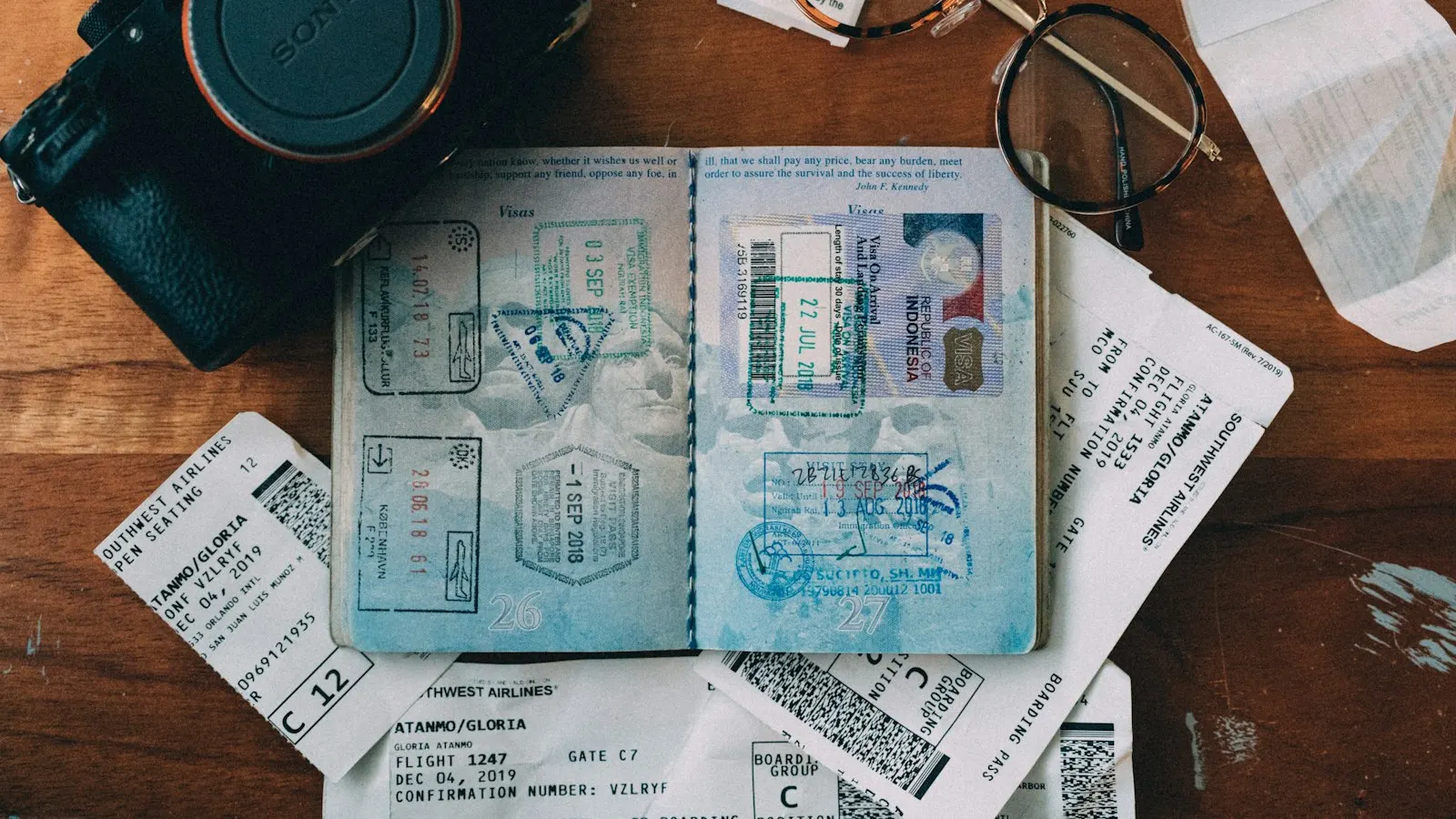


Key points
- Michael Zervos visited all 195 countries in 499 days and, with iVisa's help, secured more than 70 travel documents along the way.
- Long layovers can become free mini-vacations through airline transit programs and transit-exemption rules in places like Addis Ababa, Beijing, and Shanghai.
- Applying at smaller, less-busy consulates and holding visas from high-screening countries can make future applications smoother.
- Multiple-entry visas and in-country extensions help long-term travelers stay mobile without constant reapplication.
- These are practical planning tactics for any traveler, not just extreme adventurers, and official rules should always be checked before you go.
Around 79% of the world population needs some form of visa to go on holiday (UN Tourism, 2024), which is a reminder of just how much bureaucracy sits between you and an international trip.
But what if there were ways to handle visas faster, smarter, and without the endless waiting?
Michael Zervos of Project Kosmos set the Guinness World Record as the fastest person to visit every country, doing it in just 499 days. Along the way he picked up a set of legal visa “loopholes” that helped him skip lines, avoid rejections, and keep moving. In partnership with iVisa, he’s sharing seven of them.
A note before you start: these are planning strategies, not legal advice. Entry rules change often and vary by nationality, so always confirm the current requirements with the relevant embassy, consulate, or official government source before you travel.
Loophole 1: Turn boring layovers into affordable mini-vacations
A long layover doesn’t have to mean hours stuck at the gate. Several airlines run transit programs that turn that dead time into a short, low-cost city break.
Ethiopian Airlines, for example, offers complimentary hotel stays for qualifying layovers of roughly 8 to 24 hours in Addis Ababa. China’s transit exemption lets many travelers leave the airport and explore cities like Beijing and Shanghai visa-free for a limited window. Carriers such as Qatar Airways, Singapore Airlines, Turkish Airlines, and Emirates run similar stopover programs.
The details, eligibility, and time limits differ by airline and route, so check the specific program before you book.
Loophole 2: Shop around for visas
Not every consulate processes applications at the same speed. Applying through a smaller, less-trafficked consulate can move things along faster than going through a busy one.
For Schengen visas, consulates in countries like Iceland, Finland, Latvia, and Lithuania have at times approved applications more quickly than the busier missions of France, Italy, or Germany, sometimes within days (European Commission, 2024). Where you apply generally needs to line up with your main destination or first point of entry, so this isn’t a free-for-all, but it’s worth understanding the rules before you pick.
Loophole 3: Double up on passports
Some countries, including the United States, let frequent travelers hold a second passport. That means you can submit a visa application with one document while you keep traveling on the other, instead of being grounded while your passport sits at a consulate.
A second passport can also help avoid friction that sometimes comes from stamps or visas issued by countries that don’t get along with one another.
Loophole 4: Apply for visas with hidden powers
Certain visas carry more weight than others. Holding a visa from a country with rigorous screening, such as the US, Canada, the UK, or Japan, can make it easier to be approved elsewhere, since you’ve effectively been pre-vetted.
A Schengen visa is a strong example: it opens access to most of Europe and can smooth entry into nearby countries like Albania, Montenegro, and Georgia.
Loophole 5: The onward ticket trick
Many visa applications ask for proof of onward or return travel and accommodation. That doesn’t always mean you have to lock in and pay for everything up front.
Temporary, cancellable flight reservations and flexible hotel bookings can satisfy the “proof of onward travel” requirement without committing your money before your plans are firm. Governments generally want evidence that you intend to leave, not a non-refundable itinerary. Make sure any reservation you use is genuine and valid at the time of your application.
Loophole 6: Stack multiple-entry visas for maximum freedom
If you’re traveling for a long stretch or hopping between neighboring countries, multiple-entry visas save you from reapplying every time you cross a border.
Options worth knowing include the East Africa Tourist Visa (covering several countries in the region), India’s multiple-entry visa, the Schengen multiple-entry visa, the US B1/B2, and the UAE five-year tourist visa. A single approval can cover many trips.
Loophole 7: Extend your stay without leaving
Falling in love with a place doesn’t always mean a painful border run. A number of countries let you extend your stay from inside the country.
Peru, for instance, has allowed travelers to extend at immigration offices. Mexico has offered extensions in certain arrival situations, and countries like Indonesia, Georgia, and Cambodia have relatively flexible extension policies. Rules and fees vary, so confirm the current process with local immigration before your original permission runs out.
About Michael Zervos
Michael completed his record-breaking journey on May 30, 2024, visiting every country on Earth in 499 days. iVisa supported the trip by helping secure more than 70 travel documents along the way, combining legal strategies with practical, insider knowledge of how visa systems work.
The takeaway
You don’t need to be chasing a world record to use these ideas. Whether you’re planning a gap year or a single holiday, understanding how transit programs, consulate choice, multiple-entry visas, and in-country extensions work can save you time, money, and stress. Just remember to verify the current rules for your nationality and destination before you commit, because visa policies change and official sources always have the final word.
Read next: Flight disruptions & your visa: What travelers must know