Key points
- iVisa data across 726,824 applications shows men are 62% more likely than women to have a travel visa rejected.
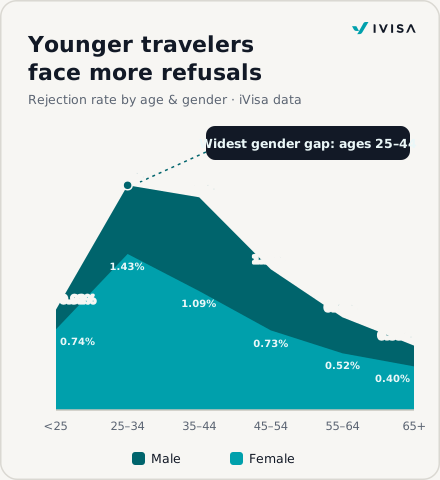
- The gap is widest for younger male travelers, peaking in the 25–34 and 35–44 age brackets.
- Digital authorizations show the largest gender gaps, led by the US ESTA, UK ETA, and Australia eVisitor.
- Applying early and adding supporting documents such as return flights and accommodation can lower rejection risk.
An analysis of 726,824 visa applications submitted between October 2024 and October 2025 points to a consistent global trend: men are 62% more likely to have their visa application rejected than women. The dataset counts only completed government decisions, so withdrawn, abandoned, or pending applications were left out.
The findings come from iVisa’s 2025 Visa Rejection Report, which looks at approval and rejection patterns across nationalities, age groups, genders, and travel types.
Key data highlights
- Global rejection rate for men: 1.02%
- Global rejection rate for women: 0.63%
- Men see the highest average rejection rates between ages 25–34 (2.06%), with the largest gender gap in the 35–44 group (men 1.95% vs women 1.09%)
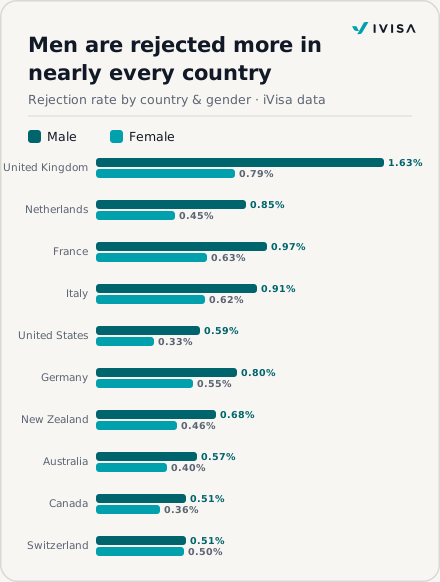
- The widest gender gaps showed up in the United Kingdom, the United States, and Italy
- Switzerland showed almost no gender difference (0.51% for men vs 0.50% for women)
- Rejection rates were lowest among applicants under 25 and those aged 65 and over
The gap widens sharply in mid-career: men aged 25 to 44 face the highest rejection rates of any group.
The same pattern holds by country: men are rejected more often than women in nearly every one, with the widest gaps in the United Kingdom and the Netherlands.
Some of the widest gender gaps appear in digital travel authorizations:
| Authorization | Male rejection rate vs female |
|---|---|
| US ESTA | 1.83x higher |
| UK ETA | 1.65x higher |
| Australia eVisitor | 1.56x higher |
Why are men being rejected more often?
The data does not measure intent or policy bias, but iVisa analysts believe a mix of behavioral patterns and processing trends is behind the gap.
Younger men tend to apply closer to their travel date and are more likely to submit minimal documentation. Supporting materials such as proof of return travel, accommodation, or financial stability can shape the outcome of an application.
Afonso Rocha, Data Analyst at iVisa, says: “The data shows a clear pattern of more cautious vetting for male applicants, particularly in younger age brackets.” Whether that traces back to risk profiling or incomplete applications, men are rejected at higher rates.
Solo travel may play a part too. In the same dataset, iVisa found that solo travelers were five times more likely to be rejected than those applying in pairs, and nearly nine times more likely than applicants traveling in groups of three or more. A young man applying alone can fall into the highest-risk profile.
How men can reduce their risk of visa rejection
iVisa suggests a few steps that tend to improve approval chances:
- Apply early: Applications submitted more than three weeks ahead had higher approval rates.
- Add supporting documents: Even when they are not required, hotel bookings, return flights, and travel itineraries help build trust.
- Be detailed: Incomplete applications are one of the most common reasons for rejection.
Many visa review factors sit outside a traveler’s control, but these changes can strengthen an application and cut down on avoidable denials. Treat them as general guidance, and always check the official requirements for the country you’re visiting.
The bigger picture
This gender-based rejection trend is one of several examined in iVisa’s 2024/5 Visa Rejection Report. The full report analyzes how age, travel group size, nationality, and timing affect approval rates across visa types.
David Perez, CEO, says: “Publishing this data is part of helping travelers make better decisions, and giving visibility into what really affects visa outcomes.”