
Key points
- Mexico opens Group A at the Estadio Azteca on June 11, 2026, with all group games played at home.
- Most Mexican fans need a valid B1/B2 visa for US matches; the FIFA PASS offers priority appointments for ticket holders.
- Canada entry needs either an eTA (if you hold a US visa or held a Canadian visa in the last 10 years) or a full Visitor Visa.
- Passports should be valid for at least six months beyond your stay for both the US and Canada.
- iVisa helps with FIFA PASS and B1/B2 applications, offering guided forms, 14+ languages, and 24/7 support.
The countdown has begun. For the third time in history, the FIFA World Cup is returning to Mexican soil. The 2026 edition is unique, though: it’s a North American tournament shared with the United States and Canada.
For the Incondicionales, those die-hard unconditional fans, following El Tri might mean starting the party at the iconic Estadio Azteca and ending it under the bright lights of New Jersey. To help you navigate the journey, iVisa has put together this guide on the match schedule and the essential travel documents you’ll need to cross borders. Mexico will hope to better their best result of reaching the quarter-finals, achieved in 1970 and 1986. As in 2026, Mexico hosted both those tournaments, so history bodes well.
Here’s what this guide covers:
- Match schedule: Tracks Mexico through Group A and their predicted knockout path to the New York/New Jersey final.
- The FIFA PASS: Details how to use the new priority system for faster US B1/B2 visa appointments.
- Multi-nation entry: Covers essential documents for Canada (eTA and Visitor Visas).
- Expert support: Explains how iVisa streamlines complex paperwork, with 24/7 assistance and simplified forms.
iVisa ProTip: Mexican football fans with a US B1/B2 visa can apply for a Canada eTA instead of a visitor visa, which simplifies the process.
The group stage: Mexico’s home advantage
As a host nation, Mexico is the head of Group A. The schedule gives the national team a home-field advantage during the initial phase, with all group games played in Mexico.
Match 1: Mexico vs. South Africa (opening match)
- Date: June 11, 2026
- Venue: Estadio Azteca, Mexico City
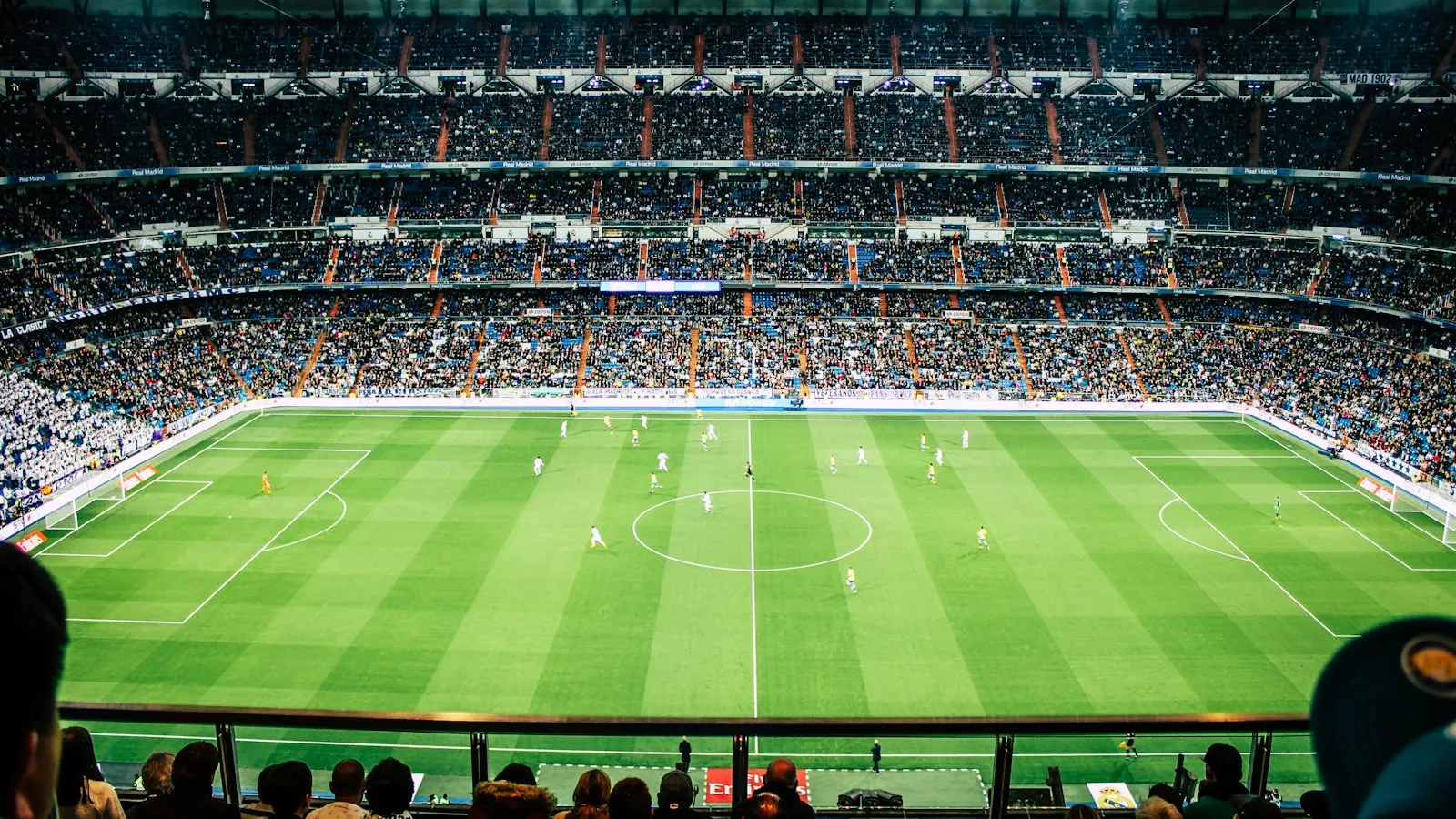
- The vibe: History will be made as the Azteca becomes the first stadium to host three World Cup opening matches. In a repeat of the 2010 opener, Mexico hosts South Africa. Expect an electric atmosphere, a sea of green jerseys, and the Cielito Lindo echoing through the Coloso de Santa Úrsula. This is where the dream begins.
Match 2: Mexico vs. South Korea
- Date: June 18, 2026
- Venue: Estadio Guadalajara (Akron), Guadalajara
- The vibe: A trip to the land of Mariachi and Tequila, where Mexico takes on South Korea. Guadalajara is the heart of Mexican tradition, and the energy in this modern stadium will be intimate but deafening. This match is often the hinge of the group stage; securing three points here could guarantee passage to the next round.
Match 3: Mexico vs. Denmark / Czechia / North Macedonia / Republic of Ireland
- Date: June 24, 2026
- Venue: Estadio Azteca, Mexico City
- The vibe: The group-stage finale. Mexico returns to the capital to seal their top spot in Group A. Their final opposition will be determined following the Path-D playoff results. With the home crowd behind them, this is where the momentum builds for the knockout stages. The party in the Zócalo will be legendary if El Tri finishes top of the group.
Mexico’s pathway to glory: predicting the road to New York
To win the World Cup, Mexico will have to navigate a knockout bracket that spans three countries. Here is our predicted pathway if Mexico tops Group A, along with a speculative outline should Mexico go unbeaten.
Round of 32: Mexico’s final stand at home
- When: June 30, 2026
- Where: Estadio Azteca, Mexico City
- The scenario: If Mexico wins Group A, they play their Round of 32 match in Mexico City, the final home game before the team potentially moves north. If they finish second in Group A, they head to Los Angeles to face the second-placed team from Group B.
Round of 16: crossing the border
- When: July 5, 2026
- Where: Houston or Mexico City
- The scenario: Depending on the bracket flow, if Mexico advances as Group A leaders and wins their R32 match, they are likely scheduled for a showdown in a major US hub like Houston (NRG Stadium), or one last roar in Mexico City if the matchup stays at home.
Quarter-finals: Mexico’s California dream
- When: July 10, 2026
- Where: Los Angeles (SoFi Stadium)
- The scenario: The quarter-finals are heavily concentrated in the US. A likely path for the Group A winner leads to Los Angeles, a city that feels like a second home for El Tri. A win here would put Mexico in the semi-finals, uncharted territory for this football-obsessed nation.
Semi-finals: deep in the heart of Texas
- When: July 14 or 15, 2026
- Where: Dallas (AT&T Stadium) or Atlanta (Mercedes-Benz Stadium)
- The scenario: By the semi-finals, the tournament moves to massive indoor NFL stadiums. Dallas is the most likely destination for the Mexican side’s bracket path. All that stands between Mexico and immortality is one game. Can they make it?
The final: Mexico on the grand stage
- When: July 19, 2026
- Where: New York/New Jersey (MetLife Stadium)
- The goal: Winners or runners-up? Either way, the Mexican dream ends in the shadows of the Manhattan skyline.
World Cup visas and travel documents for Mexican fans
Mexican fans planning to follow their team into the Round of 16 and beyond should prepare their travel documents early, especially if they require a US B1/B2 visa. Processing times can be long, and you don’t want to miss the quarter-finals because of a missing stamp in your passport. You can use our visa checking tool to see which documents you’ll need for each host country. Requirements below are a general guide; always confirm the details with the official government sources for each country.
Mexican football fans traveling to the United States
Most of the knockout stages, including the final, are in the US.
- Valid Mexican passport: Must be valid for at least six months beyond your stay.
- US B1/B2 visa: Most Mexican citizens require a B1/B2 visa to attend games in the US during the 2026 World Cup. If you already have one, make sure it hasn’t expired.
- FIFA PASS: The US Department of State has introduced the FIFA Priority Appointment Scheduling System (FIFA PASS). If you are a Mexican fan with a confirmed match ticket, you can apply to access priority visa interview appointments.
- Border Crossing Card (BCC): Often called a “laser visa,” this acts as both a BCC and a B1/B2 visitor’s visa when traveling by air. When entering the US through a land border, travel is limited to within 25 miles of the border in California and Texas, and 55 miles in New Mexico, if you can’t produce an I-94 form.
iVisa ProTip: Applications for the US B1/B2 visa are expected to increase sharply in 2026. Apply well before the tournament to give yourself the best chance of getting your travel documents in time.
Mexican football fans traveling to Canada
While Mexico plays its group games at home, some knockout matches could take place in Vancouver or Toronto.
- Canadian eTA: You can apply for an Electronic Travel Authorization (eTA) only if you hold a valid US non-immigrant visa or have held a Canadian visitor visa in the past 10 years.
- Canadian Visitor Visa: If you don’t meet the criteria above, you must apply for a full Canadian Visitor Visa (Temporary Resident Visa). This involves submitting biometrics and a longer processing time than the eTA.
- ArriveCAN travel declaration: Once you arrive in Canada, you can complete a travel declaration. Using ArriveCAN isn’t mandatory, but it reduces paperwork at the airport and can mean quicker processing through border control, a real advantage during peak travel times.
How iVisa can help
The 2026 World Cup will be one of the biggest sporting events in history. Don’t let paperwork stand in the way of supporting Mexico at football’s biggest fiesta. At iVisa, we specialize in making the complex simple.
- A streamlined application portal: Unlike government sites, our portal is built for a smooth experience, without the glitches.
- Guided US B1/B2 and FIFA PASS applications: We’ll handle your FIFA PASS application, help you find your nearest and most efficient processing center, and provide pre- and post-application support. For the B1/B2 application, that includes a dedicated Key Account Manager, interview preparation, and personal support.
- Multiple supported languages: We support applications in 14+ languages.
- Simplified forms: We’ve stripped away the confusing bureaucratic jargon so the application is shorter and easier to navigate.
- Flexible document uploads: Our platform adjusts your photos and documents to meet government specifications, so you don’t have to be a tech expert to apply.
- Reliable payment options: We accept all major credit cards, debit cards, PayPal, and Venmo.
- 24/7 customer support: If you have a question at 2 AM, our team is there to answer it.
Please note that iVisa is a private travel-document service and is not affiliated with any government. Government fees for a visa, eTA, or other document are separate from and additional to iVisa’s service fee.
Frequently asked questions for Mexican fans heading to the 2026 World Cup
Do I need a visa to follow the Mexican national team for matches in the United States?
Yes. Most Mexican citizens will need a valid B1/B2 visa to enter the US for World Cup matches. If you already have one, make sure it remains valid throughout your stay. Because visa processing times can be long, it’s best to start the application process as soon as possible.
How can I speed up my US visa application if I already have match tickets?
You can use the FIFA Priority Appointment Scheduling System (FIFA PASS). This program is for fans with confirmed match tickets, allowing them to request priority visa interview appointments to help ensure they receive their travel documents before the tournament begins.
Can I use my Border Crossing Card (BCC) to attend the World Cup final in New Jersey?
The BCC (or “laser visa”) acts as a B1/B2 visa when traveling by air. However, if you travel by land, the BCC alone only allows travel within a limited distance from the border (25 miles in California and Texas, 55 miles in New Mexico). To travel to venues further north, like MetLife Stadium in New Jersey, you’ll need to obtain an additional I-94 form.
What are the entry requirements for Mexican fans if a knockout match is held in Canada?
Entry requirements for Canada depend on your travel history:
- eTA (Electronic Travel Authorization): You can apply for this if you currently hold a valid US non-immigrant visa (like a B1/B2) or have held a Canadian visitor visa in the last 10 years.
- Visitor Visa: If you don’t meet the above criteria, you must apply for a full Canadian Visitor Visa (Temporary Resident Visa), which involves a longer application process and biometric submission.
Does my Mexican passport need to be valid for a certain amount of time to travel?
Yes. For travel to both the United States and Canada, your Mexican passport must be valid for at least six months beyond your intended stay. Check your passport’s expiration date now to make sure it covers the entire tournament, especially if you plan to stay through the final on July 19, 2026.